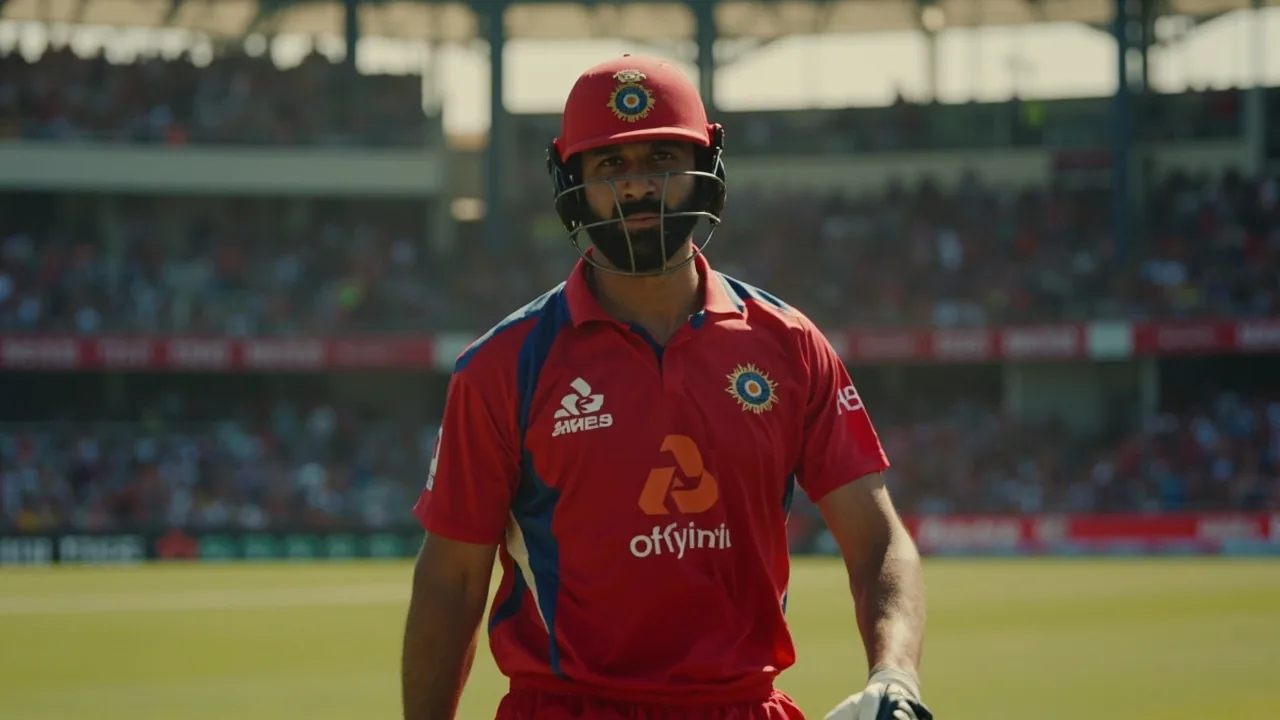
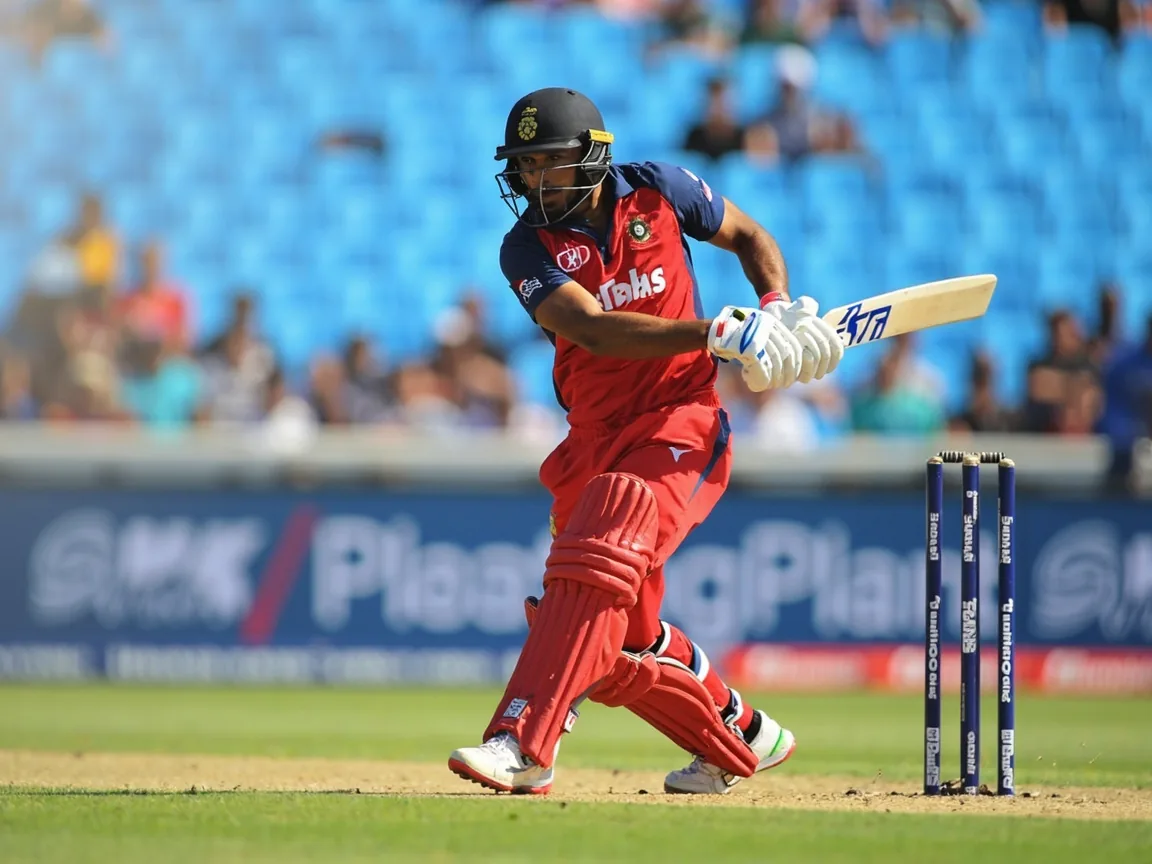
Virat Kohli IPL 2026 Form & Stats: Fantasy Cricket Selection Guide
Virat Kohli remains one of the first names fantasy players notice on an RCB slate, but reputation is not a complete selection model. This guide shows how to read his IPL 2026 role, recent form, venue, bowling matchups, chase context and ownership before locking him into a Think11 team.
By Think11 Editorial Desk · Updated · 14 min read · Players › IPL 2026
Editorial note: This is a fantasy-selection framework, not a live scorecard. IPL 2026 totals change after every match, so verify the latest official scorecard before contest lock. Think11 is intended for users 18+ in permitted states. Play responsibly and never select a player only because of reputation.
1. Start with role, not the name on the player card
Start with opportunity: opening role and expected balls faced drive the fantasy floor.
The most durable fantasy input is batting position. A confirmed opener has access to the powerplay, more legal deliveries and more ways to produce a useful score than a batter who may enter after the 10th over. Kohli's selection case therefore starts with the RCB XI and the announced batting order. If he opens, his floor is supported by opportunity even before you consider form.
Role is also about intent. Track the first 15 balls: is he rotating strike, attacking width, using his feet to spin and keeping dot-ball pressure under control? A 25 from 20 can be a healthier signal than a flashy 18 from 7 if the slower start reflects difficult conditions and he survives into the acceleration phase.
Do not turn an expected role into a certainty. Substitution rules, injuries, a revised chase and tactical changes can alter the order. The toss and final XI are the last data points, not administrative formalities.
2. Build a seven-match form card instead of using one headline score
A useful short-term form card covers the most recent seven relevant innings and records runs, balls faced, boundaries, dismissal type and phase of dismissal. Seven innings are enough to identify a pattern without letting one exceptional hundred dominate the view. Separate IPL innings from international matches because role, bowling quality and field restrictions differ.
Look beneath average and strike rate. Balls per boundary reveal whether scoring is flowing; dot-ball percentage reveals pressure; dismissals inside the first 12 balls reveal new-ball risk. Two fifties can hide three early dismissals, while three scores in the thirties can indicate a stable role that is one extra boundary away from a strong fantasy return.
As of July 15, 2026, this article deliberately does not print a live IPL 2026 aggregate that we could not verify against a current official scorecard. Treat any season total displayed in a lobby, social post or old preview as provisional until it matches the latest match record.
3. Read venue and innings conditions before projecting a score
Venue is a bundle of conditions: swing, dimensions, surface pace, dew and expected innings length.
Venue labels such as 'batting pitch' are too broad. Check first-innings par score, new-ball swing, boundary dimensions, pace-off effectiveness and whether evening dew changes the second innings. A high-scoring ground with early movement can still create a difficult first four overs for an opener.
Kohli's accumulation skill gains value on full-length innings where a top-order batter can face 35 to 55 balls. In a rain-reduced game, that time advantage shrinks and hitters who attack immediately may close the fantasy gap. Recalculate captaincy after an overs reduction rather than carrying forward a full-match projection.
Chasing context matters too. A target near par can support controlled accumulation and a long innings. An extreme target can force risk from the first over, increasing both ceiling and dismissal probability.
4. Map the opposing attack into powerplay and middle-over matchups
Split the opposition into new-ball pace, hard-length pace, wrist spin, finger spin and death bowling. For an opener, the most important matchup is usually the first three overs: which bowlers can move the ball, attack the stumps or force a specific scoring zone? A favourable career reputation does not cancel a fresh tactical threat.
Use matchup samples carefully. Ten balls are not a trend. Give more weight to dismissal method and current role than to tiny head-to-head tables. If repeated dismissals come from the same shape of delivery—late movement outside off stump, for example—that is actionable even when the total sample is small because it describes a tactical plan.
Middle-over spin changes the ceiling. If the opposition can stack spin immediately after the powerplay, estimate whether Kohli is likely to keep boundary pace or shift into strike rotation. That transition influences bonus-point probability and captaincy upside.
5. Convert the evidence into a fantasy points range
A range-based projection respects early-dismissal risk and long-innings upside.
Use three scenarios instead of one exact prediction. Floor: early dismissal after 8 to 15 balls. Base case: 30 to 50 runs with several boundaries and enough balls faced for a stable contribution. Ceiling: a 60-plus score with a strong strike-rate finish, catch points and captaincy multiplier. Assign probabilities after the toss.
The range prevents false precision. A model that says '54 runs' looks confident but ignores the binary risk of an opening batter nicking the new ball. A range makes the real decision visible: is the median useful at the current salary, and is the ceiling large enough to justify captaincy?
Add fielding as a small but real component. Kohli is involved in high-energy inner-ring and boundary positions, so a catch can rescue a middling batting return. Do not project fielding points as guaranteed, but include them when comparing two players with similar batting roles.
6. Small-league selection: protect role and median outcome
In small leagues, the goal is not to be different everywhere; it is to avoid unnecessary failure points. A confirmed top-order Kohli on a normal batting surface generally fits this objective because opportunity is visible and public ownership often reflects a legitimate role advantage.
Selection and captaincy are separate decisions. You can select a highly owned batter for protection while captaining a player with a comparable role and better matchup. This keeps the lineup structurally sound without copying the field's highest-variance multiplier choice.
A small-league fade becomes defensible when several negatives align: reduced overs, difficult new-ball conditions, an elite opening spell, uncertain fitness or a salary that blocks two equally secure all-rounders. One negative by itself is rarely enough.
7. Grand-league strategy: use ownership without fighting good projections
Grand leagues reward differentiated combinations, not random fades. Estimate Kohli's expected ownership and compare it with your probability that he reaches the ceiling scenario. If ownership is higher than your ceiling probability, the captaincy fade may be attractive even if you keep him in the XI.
Use correlated constructions. If you expect an early Kohli dismissal, the opposing new-ball bowler and a lower-owned RCB middle-order batter become logical partners. If you expect a dominant chase, Kohli plus an RCB bowler who helps create a modest target tells one coherent match story.
Do not confuse low ownership with value. A contrarian lineup still needs a route to first place. Document the match script in one sentence; if the player combination contradicts that script, rebuild it.
8. Toss-to-lock Think11 checklist for Kohli
Step 1: confirm Kohli is in the XI and expected to open. Step 2: note innings, target and any overs reduction. Step 3: identify the first two opposition bowlers and their likely new-ball method. Step 4: review the seven-match form card, focusing on balls faced and dismissal phase. Step 5: assign floor, base and ceiling ranges.
Step 6: compare salary with alternative openers and high-involvement all-rounders. Step 7: estimate field ownership. Step 8: choose selection first and multiplier second. Step 9: recheck official lineup news within the final minutes. Step 10: save one backup combination in case the platform announces a late tactical change.
9. Source discipline and what we can verify in July 2026
Current reporting provides useful context without pretending to be a live IPL score database. ESPNcricinfo's July 13, 2026 RSS feed reported that Kohli arrived with Rohit Sharma and Jasprit Bumrah ahead of India's England assignment, indicating continued high-level preparation after the IPL window. A June 18 report quoted the RCB CEO saying Kohli would play for at least the next four years. Both are context signals, not substitutes for match-by-match scorecards.
The correct way to update this guide is to add verified season figures from an official competition scorecard or a reputable live data provider, record the retrieval date, and preserve the distinction between IPL 2026, international matches and career records. Until that update is complete, use the decision framework here and verify live numbers independently.
Sources consulted: ESPNcricinfo cricket RSS feed (items dated June 18 and July 13, 2026). No exact live IPL 2026 aggregate is asserted in this article.
Frequently asked questions about Virat Kohli in IPL 2026 fantasy teams
Should Virat Kohli be an automatic fantasy pick in every IPL 2026 match?
No player should be automatic at every salary. Kohli becomes a priority when he is confirmed to open, the venue supports sustained top-order scoring, and the chase or first-innings conditions give him enough balls to build an innings. Reassess him when the pitch is unusually slow, rain shortens the match, or the opposition has a strong new-ball plan.
Is Virat Kohli better for small leagues or grand leagues?
His stable top-order role usually suits small leagues, where access to balls and a higher median score matter. In grand leagues, ownership and captaincy leverage are equally important: you may select him but captain a lower-owned player when the expected field ownership is extreme.
What matters more for Kohli: recent runs or batting role?
Role comes first. An opener expected to face a large share of the innings can remain a strong fantasy option after two low scores. Recent form helps adjust confidence, but it should be read alongside balls faced, dismissal type, boundary rate and whether the player is reaching the middle during the best batting phase.
When is Kohli a strong fantasy captain choice?
He is strongest as captain when RCB bat in a stable top-order environment, the forecast supports a full match, and the opposing attack lacks an obvious new-ball matchup advantage. Captaincy becomes less attractive in severely shortened games because accumulation time disappears.
How should fantasy players use IPL 2026 statistics safely?
Use verified scorecards and official match data, and separate season-to-date numbers from career records. This guide intentionally avoids publishing an unverified live IPL 2026 aggregate. Recheck runs, average, strike rate and venue splits after the toss because live figures change every match.
Can Kohli still be selected if RCB bat second?
Yes. A clear chase can improve decision quality for an experienced top-order batter, especially when the required rate is manageable. The risk rises if dew strongly favours the batting side but creates very high ownership, or if a steep required rate forces immediate boundary-hitting from ball one.